Surf Fitness & Paddle Strength
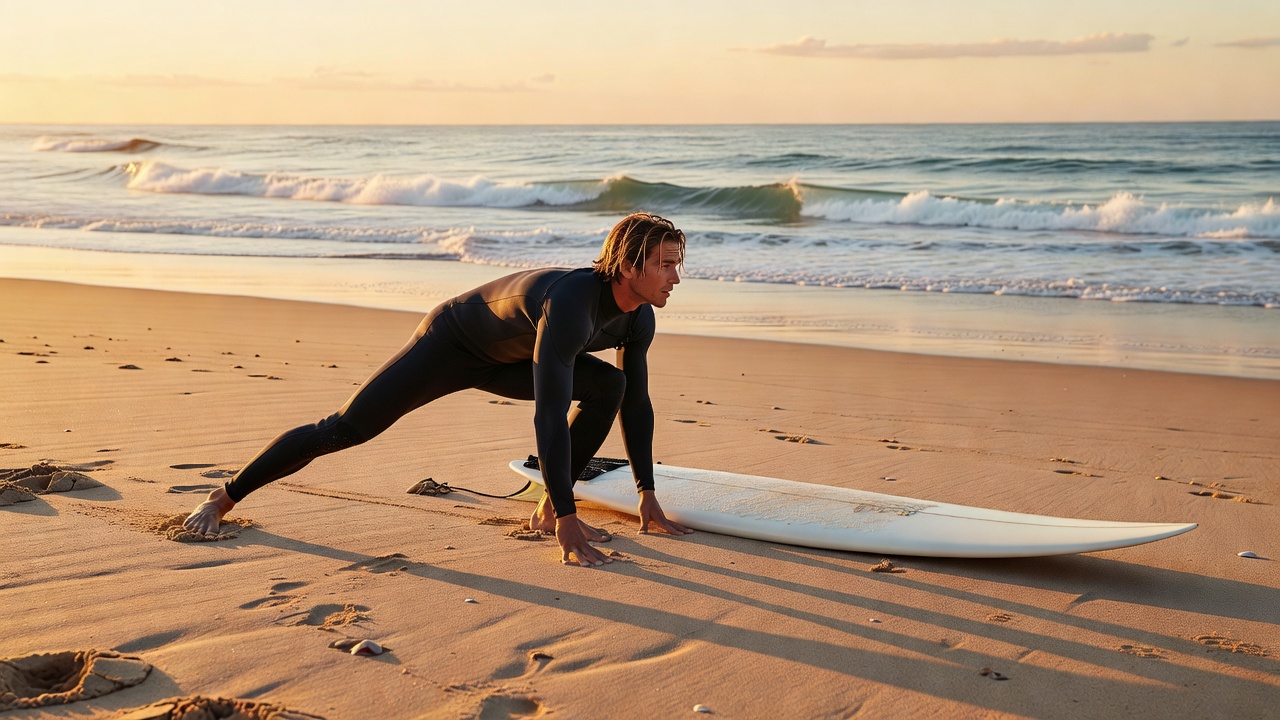
Surfing is one of the most physically demanding sports in the world. A typical session requires cardiovascular endurance for paddling out, explosive fast-twitch muscle activation for the pop-up, and tremendous core stability to navigate the dynamic surface of a moving wave.
The frustrating reality is that the best way to get fit for surfing is simply to surf more. However, for landlocked surfers or those dealing with flat spells, maintaining surf-specific fitness out of the water is critical to ensuring your body is ready when the swell finally arrives.
The Reality of Paddling
It is estimated that during a typical surf session, a surfer spends 85% of their time paddling, 10% sitting in the lineup, and only 5% (often less) actually riding waves. Therefore, paddle endurance is the absolute foundation of surf fitness.
Paddling primarily recruits the latissimus dorsi (back), deltoids (shoulders), triceps, and the stabilizing muscles of the lower back (erector spinae). When these muscles fatigue, your paddle strokes lose depth and power, meaning you'll miss waves or get caught inside the impact zone.
Out-of-Water Paddle Training
To simulate the cardiovascular demands and muscle group isolation of paddling, incorporate the following into your routine:
- Freestyle Swimming: Swimming laps is the single best cross-training activity for surfers. Focus on high-elbow recovery and maximizing the pull underwater. Interval training (e.g., sprinting 50 meters, resting, then repeating) mimics the burst of energy needed to paddle for a wave.
- Resistance Band Pulls: Attach a resistance band to a door anchor. Bend slightly at the waist and mimic the alternating pull of a paddle stroke. Aim for high repetitions (3 sets of 50 reps) to build muscular endurance.
- Superman Holds: Lay flat on your stomach and lift your arms, chest, and legs off the ground simultaneously. Hold for 30 seconds. This builds the lower back strength required to keep your chest elevated on the surfboard, reducing drag.
Explosive Power: The Pop-Up
The transition from lying prone to standing sideways on the board is called the "pop-up." It must happen in a fraction of a second as the board drops down the face of a wave. A slow pop-up results in getting stuck in the lip or pearl-diving straight to the bottom.
The pop-up isn't a slow push-up; it's an explosive, plyometric movement. To train for it, practice plyometric push-ups (pushing hard enough that your hands leave the floor) and burpees. Focus on bringing your feet directly under your chest in one fluid motion, landing with your knees bent and a wide stance.
Core Stability and Balance
Once you are on your feet, the water moving beneath your board requires your body to constantly adjust to maintain balance. A strong core transfers power from your lower body (legs and hips) through to your upper body, allowing for aggressive turns.
- Plank Variations: Standard planks, side planks, and planks with alternating shoulder taps build incredible anti-rotational core strength.
- Indo Board / Balance Boards: Utilizing a balance board while doing squats or catching a medicine ball forces your stabilizer muscles to fire rapidly, closely mimicking the feeling of riding a wave.
- Yoga: Flexibility is just as important as strength. Surfing requires deep hip mobility and thoracic spine rotation. Regular yoga practice (specifically focusing on downward dog, warrior poses, and pigeon pose) will drastically improve your recovery time and prevent common surfing injuries like strained lower backs and blown-out knees.
Conclusion
The ocean is an unforgiving environment that quickly exposes physical weaknesses. By committing to a dry-land training routine that addresses endurance, explosive power, and flexibility, you ensure that fatigue won't be the reason you miss the wave of the day.